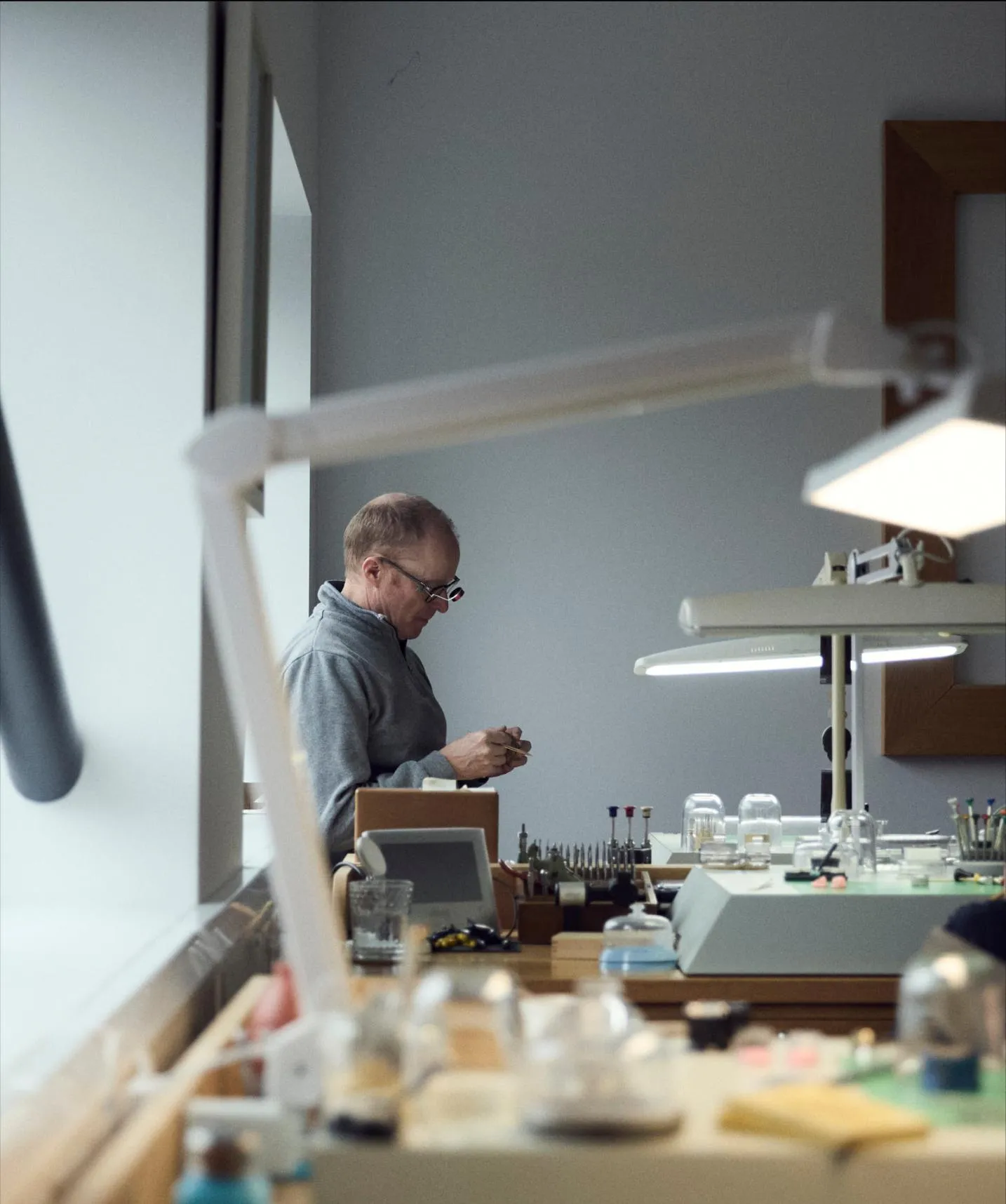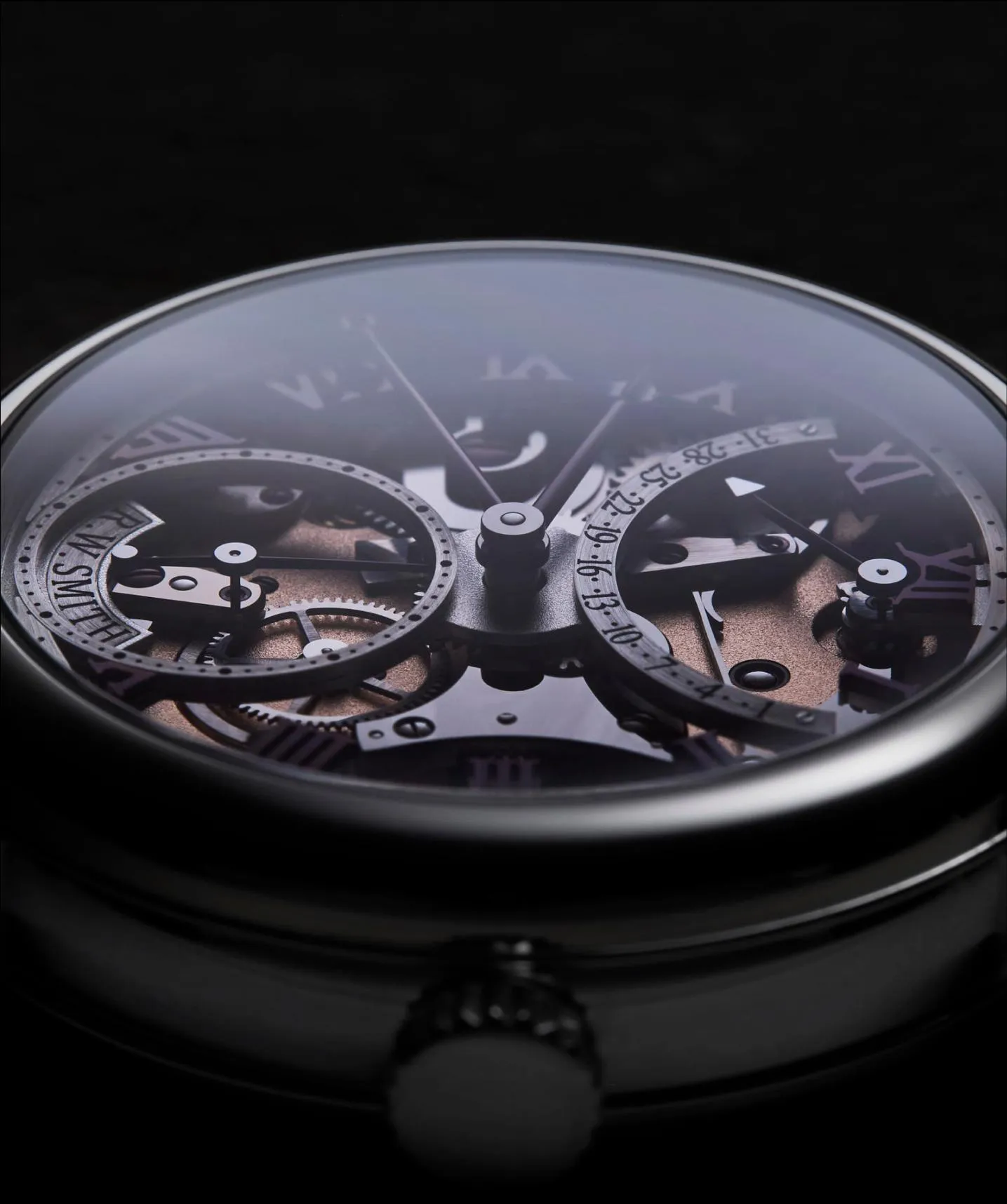
To mark the centenary of Dr George Daniels CBE, Roger W. Smith OBE reflects on the life, work and enduring legacy of his mentor.

A Personal Reflection by Roger W. Smith OBE, August 2026
On 19 August 2026, Dr. George Daniels CBE would have celebrated his 100th birthday. For most people, a centenary is an opportunity to look back. For those of us fortunate enough to have known him, it is also an opportunity to reflect on ideas that remain remarkably relevant today.
Throughout his lifetime, George made just twenty-four pocket watches and two wristwatches. I remember chatting with him on the opening night of his ‘Retrospective Exhibition’ at Sotheby's in 2006. Before the exhibition cases had been filled, he told me he had been sitting beside the assembled collection of his life's work. It fitted into just two A4-sized foam-lined metal trays.
Yet those twenty-six watches contained ideas that fundamentally changed modern mechanical timekeeping. Few, if any, watchmakers have produced so little, yet influenced so much.
George began making his first pocket watch in the late 1960s, although in reality that watch had begun many years earlier. Through his passion for motoring, he met a remarkable circle of collectors, historians and enthusiasts who shared his fascination not only with vintage motor cars but also with horology. George was the practical member of that group. While others discussed the history of watchmaking, George could examine the watches themselves and explain why they worked, why they failed and, perhaps more importantly, how they might be improved. His practical understanding allowed him to bridge the gap between the historian and the horologist.
Nowhere is the depth of that understanding better demonstrated than in ‘Watches’ by Clutton and Daniels. Within the covers there are over fifty plates illustrating every known escapement then devised. George wasn't interested in escapements simply because they were historically interesting. He wanted to understand why they worked and where they failed. George understood the strengths and weaknesses of each design, and it was this breadth of understanding that enabled him to become the twentieth century's most formidable horologist.
It was already evident in the first pocket watch he completed in 1969. Until then, the detent escapement had never been self-starting and required a slight rotational movement by the winder to bring the escapement into action. George quietly solved the problem by redesigning its geometry, producing a self-starting detent escapement while simultaneously reducing its tendency to stop in service.
That achievement was more than an isolated improvement. It marked the beginning of a lifelong exploration into the escapement itself. George came to believe that if the mechanical watch was to survive, its greatest weakness, an escapement dependent upon lubrication to function, had to be fundamentally reconsidered. That journey culminated in 1974 with what was arguably his greatest technical contribution: the invention of the co-axial escapement. He then devoted the next quarter of a century to persuading a sceptical Swiss watch industry that this new escapement offered a genuine route towards rejuvenating an industry that had been brought to its knees by the quartz revolution.
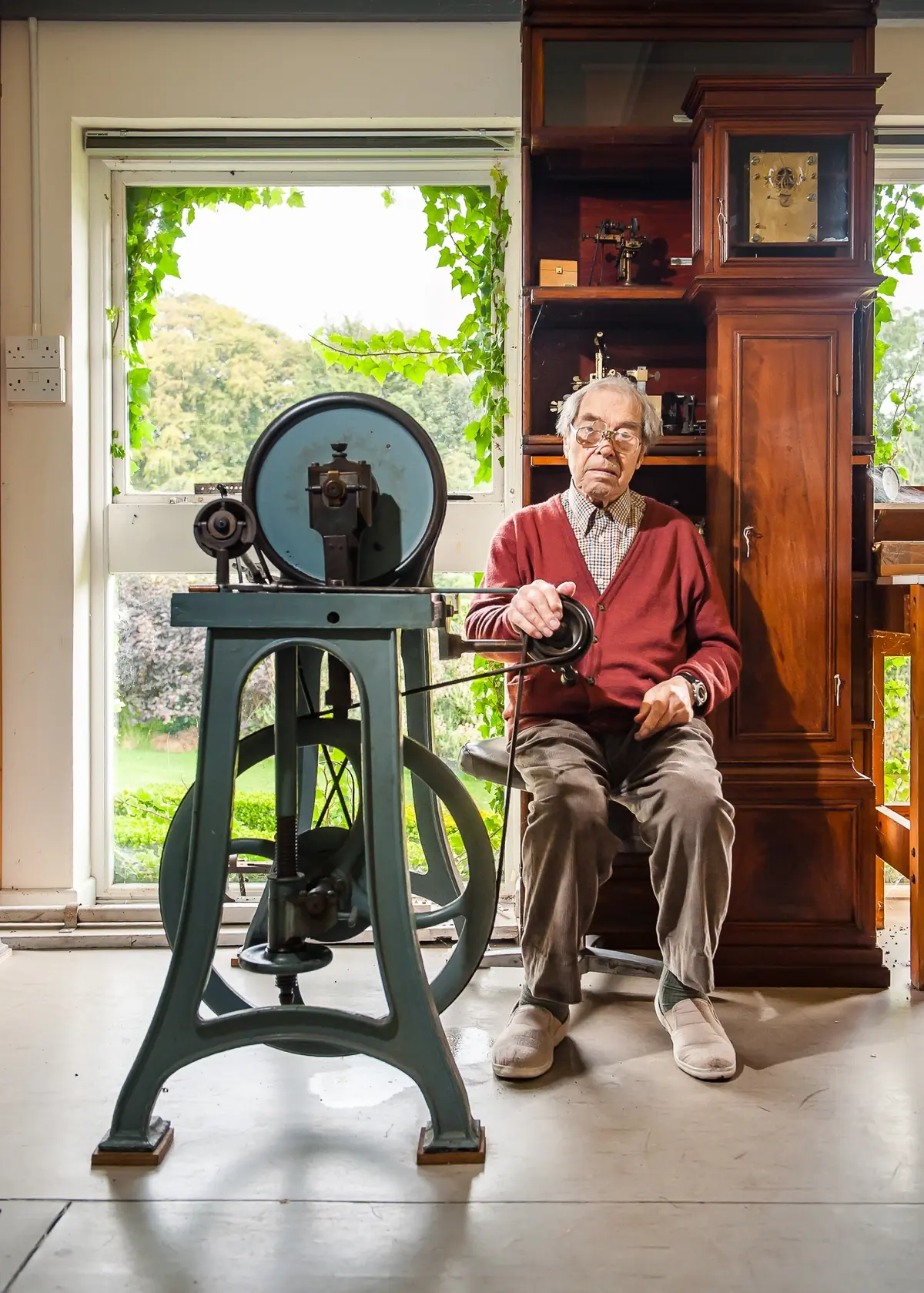
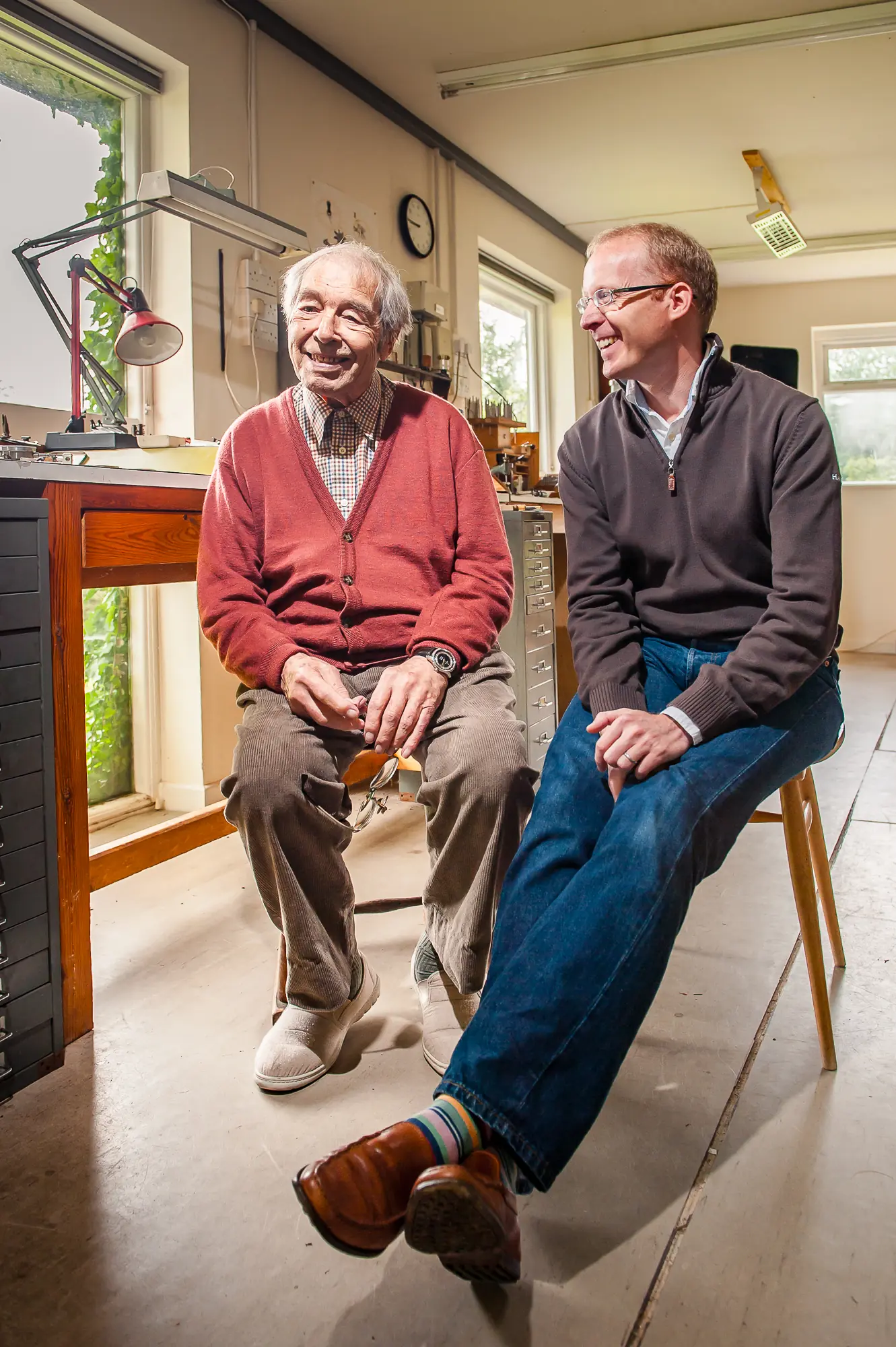
My introduction to George came during his visit to the college where I was studying in 1987, a day that left a lasting impression on me. I can still picture him arriving in his tailored blue pinstripe three-piece suit and immaculately polished black shoes, carrying himself with an authority that immediately commanded attention.
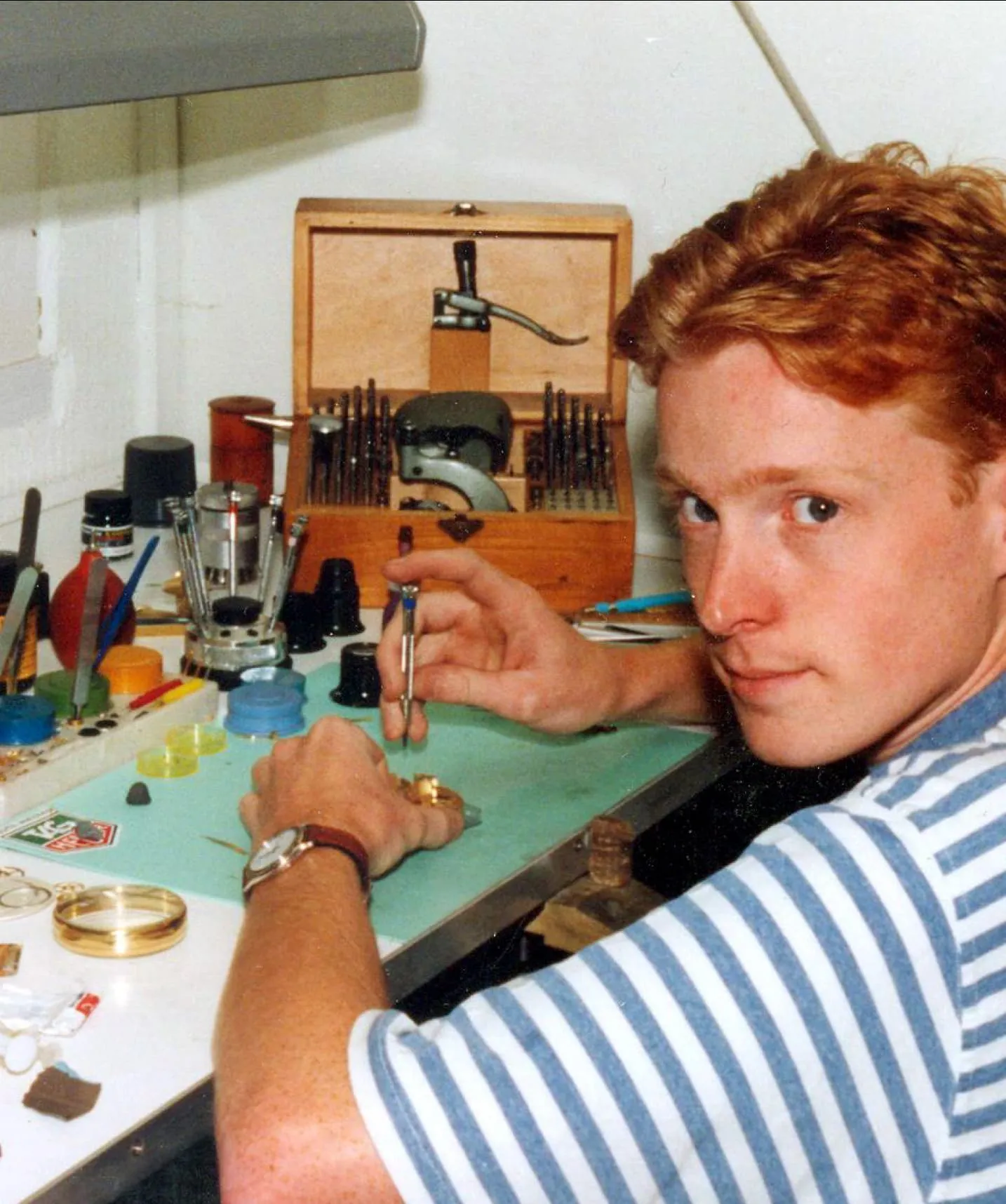
That impression was only deepened through his book, Watchmaking, which became my constant companion during the seven years it took me to make my first two pocket watches. I studied every sentence and every illustration, and when I finally walked into George's Isle of Man workshop in 1998 to begin work on the Millennium Project, it felt as though I had stepped into the three-dimensional reality of his book.
The workshop itself was fascinating. During my first weeks and months, George painstakingly introduced me to every machine, tool and process that we would employ in the making of the Millennium wristwatch series. His instructions were delivered with remarkable clarity, something that surprised me because, outside the workshop, he had acquired a reputation for being a difficult man. It was only through working alongside him that I came to understand the truth. George simply had no patience for time wasters, and, as the saying goes, he didn't suffer fools gladly. He expected the same standards from others that he demanded of himself.
Since inheriting The Daniels Workshop Collection in 2011, my study of his watches, his drawings and his methods has continued. The more closely I examine his work, the more I appreciate the extraordinary mind behind it. What continues to surprise me is his willingness to rethink problems that everyone else had accepted. There is an audacity to many of his mechanical solutions - a willingness to completely dismantle conventional thinking - that still surprises me today.
One of my current projects is to complete George’s unfinished pocket watch - George's final work. Although time itself was ultimately the winner, the piece offers a fascinating dive into George’s soul through the clarity of its thought and design.
There was perhaps no greater example of this than the Space Traveller pocket watch, which I first saw during George’s visit to my college and later had the privilege of servicing following its sale after his death. The watch was a masterclass in design, with its beauty derived from the simplicity and clarity of its construction. Nothing was superfluous; every component had purpose.

One standout feature of the watch was its double-wheel escapement, where one escape wheel has a single tooth fewer than its mate on the opposite side of the lever. This seemingly simple alteration completed the train calculations that allowed one train of wheels to display Mean Solar time and the other Sidereal time. To me, it perfectly illustrates George's deep understanding of the escapement and his ability to translate an idea into an elegant mechanical solution.
It is details such as these that reveal George’s genius. They are not immediately obvious, yet they speak volumes about the way his mind worked, always questioning, always refining, and always striving for a better solution.
Outside the workshop, George possessed a tremendous, often dry wit and a towering passion for life's faster – and simpler – pleasures. Not everything revolved around watches, and one of the great joys of working with him was his legendary love for cars, particularly his Bentleys and the 1932 Alfa Romeo 8C which one summer we used to make regular trips to his favourite local pub, The Grosvenor in Andreas, where he would relax over a pint of Okells and his usual order of fish and chips, or, as George always called it, "whale and chips." It was in those moments, pint in hand, that you saw the true warmth and character of the man behind the master.
There are many things that can be said about George Daniels, and many honours that were rightly bestowed upon him. His watches, his inventions and his craftsmanship alone would have secured his place in horological history. Yet after more than four decades studying his life’s work and reflecting upon the many conversations we shared, I have come to believe that perhaps his greatest achievement was something less tangible.
George made other people care about what he was doing.
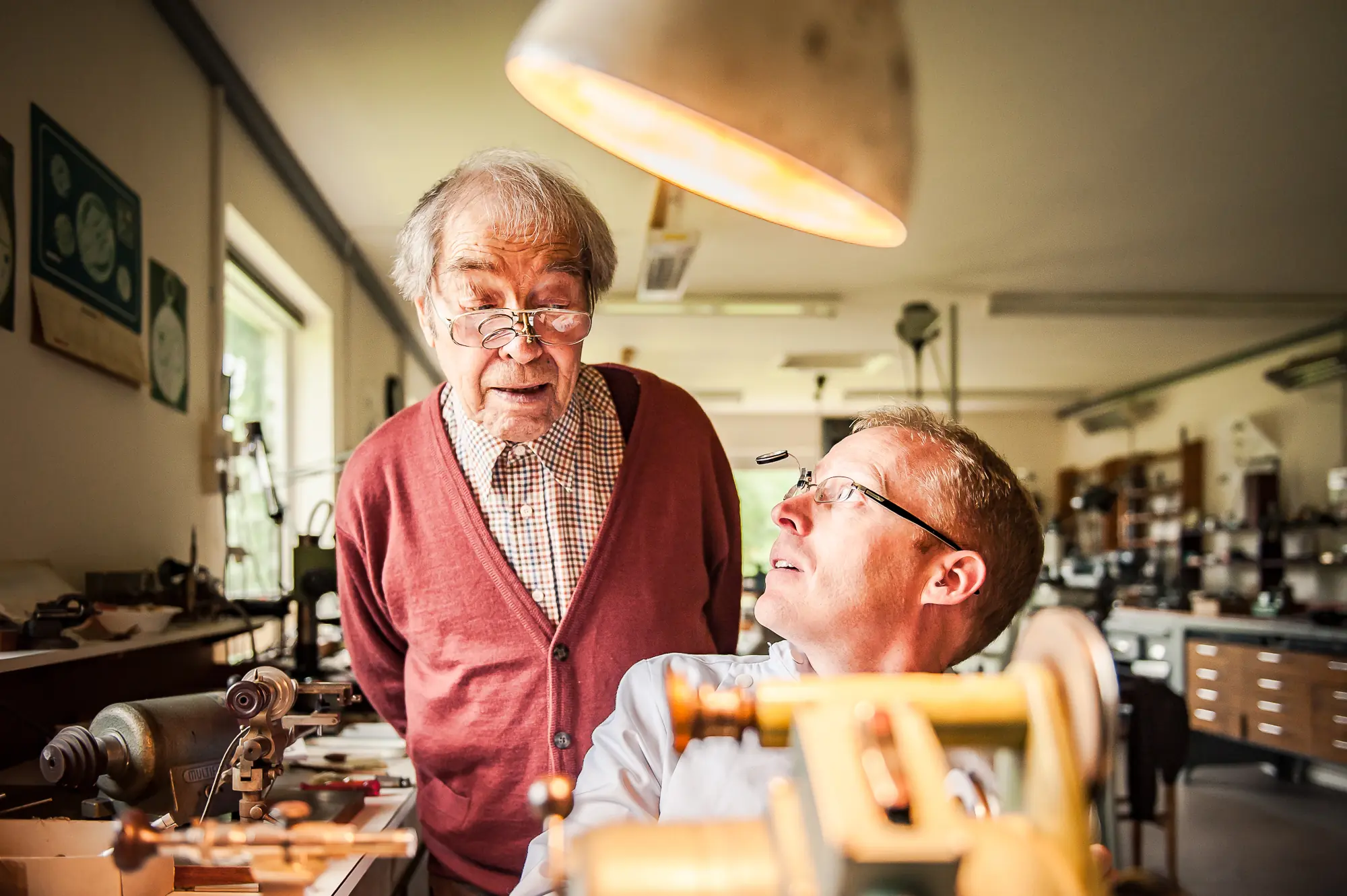
He devoted an extraordinary amount of time to explaining his work, articulating why it mattered, and ensuring that through his books, lectures and drawings others understood the path he had chosen. His ability to communicate, to educate, to inspire curiosity and to encourage others to think more deeply about mechanical watchmaking was every bit as important as the watches themselves.
George Daniels did not simply leave behind twenty-six remarkable watches. He left behind generations of watchmakers, collectors and enthusiasts who continue to be inspired by his ideas. In the end, that may prove to be his greatest legacy.